In god we must
Geplaatst: 07 feb 2012, 21:14
Hier een (zeer lang) artikel wat ik tegen kwam op internet aangaande het geloof in de VS.
Ik heb eronder een aantal passages eruit gezet.
Ik ben benieuwd hoe de neder-amerikanen hier tegen aan kijken en of ze ook zulke ervaringen hebben gehad.
http://www.slate.com/articles/life/f...atheists_.html
Point, Texas (pop. 792) is not the easiest place for a single lesbian to raise her child. But neither her sexuality nor her unwed parenthood are enough to make Renee Johnson an American conservative’s worst nightmare. As she explained to me when I met her at Rains County Library, “I’d rather have a big ‘L’ or ‘lesbian’ written across my shirt than a big ‘A’ or ‘atheist’, because people are going to handle it better.”
We had met in a private room because Johnson worried that anywhere else in the town, people might overhear us and be offended by her godlessness. No wonder she often feels alone in her non-belief. But Johnson is far from unique. As I found out when I travelled across the US last year, atheists live in isolation and secrecy all over the country. In a nation that celebrates freedom of religion like no other, freedom not to be religious at all can be as hard to exercise as the right to swim the Atlantic.
...
Friends have rejected him. “I used to be a good running friend with somebody who doesn’t live far from here. I mentioned on one occasion that I was an atheist and I’ve never seen him again … I came here knowing this was the Bible Belt, but I didn’t realise it was a more like a totalitarian Christian society: you’re either one of them or you’re not and there’s no in between. So I’ve learnt this lesson, to keep it to myself as much as possible.”
...
Despite what looks like a clear constitutional ban on religious discrimination, atheists face problems in many areas of public life, including the military. A woman in the Marines, who has to remain anonymous, says that although chapel and prayer were technically optional, “it was frowned upon” to opt out. In Iraq, chaplains would come into the bunkers and say “bow your heads and pray”. Everyone on the base would receive a prayer through a daily email. Her real problems came at the end of her first tour of duty. “We killed a lot of people,” she said. When she got back she had “a really hard time dealing with it” and “got really bad into alcohol”. But when she asked for help, she was sent to the chaplain, even though she said she didn’t believe in God.
...
The most extraordinary story I heard was from a woman in Tuscaloosa county, Alabama. She grew up in nearby Lamar county, raised in the strict Church of Christ, where there is no music with worship and you can’t dance. She says her family love her and are proud of her, but “I’m not allowed to be an atheist in Lamar County”. What is astonishing is that she can be pretty much anything else. “Being on crack, that was OK. As long as I believed in God, I was OK.” So, for example, “I’m not allowed to babysit. I have all these cousins who need babysitters but they’re afraid I’ll teach them about evolution, and I probably would.” I couldn’t quite believe this. She couldn’t babysit as an atheist, but she could when she was on crack? “Yes.” I laughed, but it is hard to think of anything less funny.
...
Data backs up anecdote. A now famous University of Minnesota study concluded that Americans ranked atheists lower than Muslims, recent immigrants, gays and lesbians and other minority groups in “sharing their vision of American society”. Nearly 48 per cent said they “would disapprove if my child wanted to marry a member of this group” (many more than the next most unpopular category, Muslims, at 33.5 per cent). No wonder atheist groups talk of modelling their campaigns on the civil rights, gay and women’s liberation movements. It is not that they claim their persecution is on the same level but that they suggest the way forward requires a combination of organising and consciousness-raising. “We want people to realise that some of their best friends are atheists, some of their doctors, and lawyers and fire chiefs and all the rest of them are atheists,” says Dennett.
...
High-profile legal challenges to cases of religious discrimination have also gained a lot of attention. The AHA, for instance, set up the Appignani Humanist Legal Center (AHLC) five years ago, employing a staff attorney and calling on the services of about 30 pro bono attorneys, while the Freedom From Religion Foundation and American Atheists also use court actions to bring attention to cases. For instance, the AHLC won a settlement for a Southwestern Community College teacher who was fired for allegedly telling his class that the story of Adam and Eve should not be taken literally.
...
There is still, however, a reluctance for many to come out. “Other than [Stark] we know of at least two dozen other atheists in Congress that just aren’t willing to admit it,” says Speckhardt, a number almost identical to that given to me by Silverman. “They feel that it will be political suicide for them, that they wouldn’t get re-elected or they couldn’t get any of their bills passed. We’ve got to work hard to change that feeling out there.”
That may not be an impossible task, but it certainly looks like a very hard one. Meanwhile, the best hope for America’s atheists is that more people come to understand the message that one man posted on a sign outside his Florida home after he came out as an atheist and all his formerly friendly neighbours, apart from a Muslim family, stopped talking to him: “I’ve been an atheist all my life. Last year I was a nice guy.”
Ik heb eronder een aantal passages eruit gezet.
Ik ben benieuwd hoe de neder-amerikanen hier tegen aan kijken en of ze ook zulke ervaringen hebben gehad.
http://www.slate.com/articles/life/f...atheists_.html
Point, Texas (pop. 792) is not the easiest place for a single lesbian to raise her child. But neither her sexuality nor her unwed parenthood are enough to make Renee Johnson an American conservative’s worst nightmare. As she explained to me when I met her at Rains County Library, “I’d rather have a big ‘L’ or ‘lesbian’ written across my shirt than a big ‘A’ or ‘atheist’, because people are going to handle it better.”
We had met in a private room because Johnson worried that anywhere else in the town, people might overhear us and be offended by her godlessness. No wonder she often feels alone in her non-belief. But Johnson is far from unique. As I found out when I travelled across the US last year, atheists live in isolation and secrecy all over the country. In a nation that celebrates freedom of religion like no other, freedom not to be religious at all can be as hard to exercise as the right to swim the Atlantic.
...
Friends have rejected him. “I used to be a good running friend with somebody who doesn’t live far from here. I mentioned on one occasion that I was an atheist and I’ve never seen him again … I came here knowing this was the Bible Belt, but I didn’t realise it was a more like a totalitarian Christian society: you’re either one of them or you’re not and there’s no in between. So I’ve learnt this lesson, to keep it to myself as much as possible.”
...
Despite what looks like a clear constitutional ban on religious discrimination, atheists face problems in many areas of public life, including the military. A woman in the Marines, who has to remain anonymous, says that although chapel and prayer were technically optional, “it was frowned upon” to opt out. In Iraq, chaplains would come into the bunkers and say “bow your heads and pray”. Everyone on the base would receive a prayer through a daily email. Her real problems came at the end of her first tour of duty. “We killed a lot of people,” she said. When she got back she had “a really hard time dealing with it” and “got really bad into alcohol”. But when she asked for help, she was sent to the chaplain, even though she said she didn’t believe in God.
...
The most extraordinary story I heard was from a woman in Tuscaloosa county, Alabama. She grew up in nearby Lamar county, raised in the strict Church of Christ, where there is no music with worship and you can’t dance. She says her family love her and are proud of her, but “I’m not allowed to be an atheist in Lamar County”. What is astonishing is that she can be pretty much anything else. “Being on crack, that was OK. As long as I believed in God, I was OK.” So, for example, “I’m not allowed to babysit. I have all these cousins who need babysitters but they’re afraid I’ll teach them about evolution, and I probably would.” I couldn’t quite believe this. She couldn’t babysit as an atheist, but she could when she was on crack? “Yes.” I laughed, but it is hard to think of anything less funny.
...
Data backs up anecdote. A now famous University of Minnesota study concluded that Americans ranked atheists lower than Muslims, recent immigrants, gays and lesbians and other minority groups in “sharing their vision of American society”. Nearly 48 per cent said they “would disapprove if my child wanted to marry a member of this group” (many more than the next most unpopular category, Muslims, at 33.5 per cent). No wonder atheist groups talk of modelling their campaigns on the civil rights, gay and women’s liberation movements. It is not that they claim their persecution is on the same level but that they suggest the way forward requires a combination of organising and consciousness-raising. “We want people to realise that some of their best friends are atheists, some of their doctors, and lawyers and fire chiefs and all the rest of them are atheists,” says Dennett.
...
High-profile legal challenges to cases of religious discrimination have also gained a lot of attention. The AHA, for instance, set up the Appignani Humanist Legal Center (AHLC) five years ago, employing a staff attorney and calling on the services of about 30 pro bono attorneys, while the Freedom From Religion Foundation and American Atheists also use court actions to bring attention to cases. For instance, the AHLC won a settlement for a Southwestern Community College teacher who was fired for allegedly telling his class that the story of Adam and Eve should not be taken literally.
...
There is still, however, a reluctance for many to come out. “Other than [Stark] we know of at least two dozen other atheists in Congress that just aren’t willing to admit it,” says Speckhardt, a number almost identical to that given to me by Silverman. “They feel that it will be political suicide for them, that they wouldn’t get re-elected or they couldn’t get any of their bills passed. We’ve got to work hard to change that feeling out there.”
That may not be an impossible task, but it certainly looks like a very hard one. Meanwhile, the best hope for America’s atheists is that more people come to understand the message that one man posted on a sign outside his Florida home after he came out as an atheist and all his formerly friendly neighbours, apart from a Muslim family, stopped talking to him: “I’ve been an atheist all my life. Last year I was a nice guy.”


 Ik ben atheist en verberg het niet en heb niet het idee dat mensen mij daarom vermijden, maar soms kan ik met een enorme plaat voor mijn kop rondlopen. Een ieder moet zelf weten hoe ze een eventuele spiritueel gat in hun leven moeten vullen; sommigen doen dat met "organized religion". Waar ik me wel aan erger is de noodzaak van zowel sommige religieuzen als atheisten om zeer confronterend op te willen treden tegen andersdenkenden. Jij gelooft niet in god dus ben jij slecht; of jij gelooft wel in god dus ben jij dom. Waarom is iemand goed of slecht omdat hij/zij een bepaald dogma aanhangt?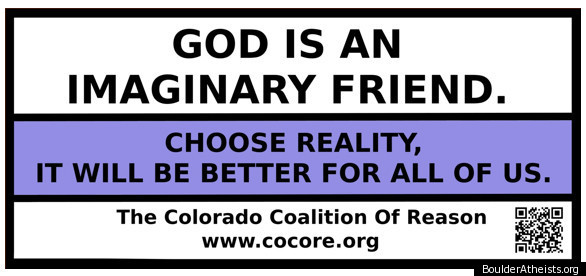


 .
.
